Thursday, May 22, 2014

La laïcité et la gestion sociopolitique au Liban


Les tenants de systèmes laïcs au Liban, nombreux avant 1975 mais n'ayant pas complètement disparu depuis, considèrent les composantes sociétales telles la tribu et la confession religieuse comme obstacles au développement, à la modernité, à la démocratie, à l'État de droit. Il ne s'agit pas uniquement des marxistes et des procommunistes, mais également de penseurs dits «libéraux», influencés par la Révolution française, la IIIe République, Max Weber et la question de la «rationalisation des sociétés traditionnelles», Auguste Comte, Émile Durkheim..., et de «nouveaux partis et groupes de gauche, alternatifs ou indépendants» qui adoptent d'autres formes et lieux de production et de promotion, des modes inédits de participation à la vie politique, regroupant notamment de jeunes universitaires, journalistes, intellectuels(lles), activistes, artistes, blogueurs(ses), etc.
Pour les partisans de systèmes laïcs, la structuration communautaire de la société libanaise et de l'État est archaïque, vestige des époques ottomane et mandataire. Ceux-là prônent donc la séparation nette entre politique et religion, ou une laïcité «à la française», «fermée».
La récente polémique concernant le mariage civil au Liban pose non seulement les questions suivantes à élucider: «Pour ou contre le mariage civil au Liban?», «Mariage civil obligatoire ou facultatif?», etc. Elle devrait nous inciter, Libanais et Libanaises, à soulever les problèmes épistémologiques en histoire et en analyse sociopolitique de notre pays. En effet, l'absence de rigueur intellectuelle se traduit par l'abus de concepts et de notions identitaires exclusivistes, stimulé par une conjoncture favorable, appauvrissant dangereusement l'univers culturel des Libanais qui bascule dans l'identitaire exclusif et hégémonique de type confessionnel. L'analyse historique et ou sociopolitique devient dans ce cas une œuvre de combat, tantôt en adoptant une grille de lecture forgée par le néo-orientalisme occidental et, d'autres fois, celle clamée par différents groupes fondamentalistes; ces lectures considèrent par exemple que l'identité collective de la société libanaise est et restera dans l'état d'involution qui est le sien, et que les idéologies de type confessionnel continueront de dominer la production et la consommation d'idéologie.
Afin de sortir du cercle vicieux identitaire qui accrédite ces thèses absolutistes et simplistes, il est nécessaire de dégager un langage historique et sociopolitique cohérent. La cohérence n'implique pas nécessairement le développement d'un langage, d'une praxis et d'une mentalité strictement «profanes» mais de trouver une voie médiane, médiatrice, entre la diversité des discours et identités présents au Liban, et de concilier entre libertés individuelles et appartenances communautaires. À mon avis, cette conciliation est possible dans le cadre d'une gestion des diversités regroupant deux cadres d'organisation qui se basent sur une conception de l'humain ne pouvant se reconnaître qu'à travers une multiplicité de variantes: le premier doit donner au citoyen – quelles que soient ses appartenances – la possibilité de l'action individuelle directe et faire de lui un partenaire du pouvoir, et il devrait par exemple lui permettre d'adhérer à une législation civile unificatrice du statut personnel. Le deuxième doit permettre aux différentes communautés de sauvegarder l'entente et l'harmonie du tissu social et l'unité du pays et de la société – l'objectif n'étant pas de supprimer par exemple les tribunaux religieux, mais d'ouvrir la possibilité de l'implantation de tribunaux civils.
L'objectif n'est donc pas d'évoquer le danger du confessionnalisme pour prêcher les vertus de l'individualisme, ni les effets néfastes de ce dernier donnant lieu à la survalorisation des identités collectives confessionnelles. Il ne s'agit pas d'opposer le souci de réalisation de soi et de l'humanité à l'engagement religieux; au contraire, les deux sont complémentaires et vont dans un même sens: faire le bien, améliorer sa vie et celle des autres, et libérer les hommes de ce qui les aliène. On combine donc deux principes qui doivent être également protégés: l'autonomie individuelle –
et non l'atomisation de l'individu qui se traduit par une absence de mise à distance de soi par rapport aux autres et au monde, voire par une absence d'esprit critique – et la «sphère collective» – religieuse officielle, religieuse non officielle et non religieuse.


Il ne s'agit donc pas de privilégier le développement de l'individu privé au détriment du citoyen. Mais sans la liberté individuelle ou l'autonomie, l'idée de citoyen ne peut être conçue (voir L'Orient-Le Jour du jeudi 22 mai 2014).
Dans cette perspective, une relecture du concept de la oumma s'avère aussi importante, surtout si l'on considère qu'il en existe une diversité d'emplois et de sens. Ainsi, outre la définition dominante qui la qualifie d'un groupe d'hommes et de femmes qui se lient et s'accordent par le choix d'une religion, de l'unité de la foi et se traduit dans les faits par une unité sociopolitique – l'identité islamique est l'axe fondamental autour duquel se constitue le groupe –,
une autre ne la lie pas à la religion : par exemple, selon Fârâbi, elle est un « groupement d'hommes dans un territoire déterminé ». Il s'agit donc d'une forme de sécularisation de la oumma, d'une vision que l'on pourrait qualifier de pragmatique, où l'on s'accorde par exemple sur les critères suivants : intérêt commun, crainte, affinité, contrat, similitude de qualités naturelles, communauté de langue...
Cette relecture du concept de la communauté démontre qu'il est possible aux théologies islamiques au Liban – et chrétiennes en l'occurrence – de concilier une vision théologique de l'homme-sujet de Dieu et une vision juridico-politique octroyant à l'homme la responsabilité de ses choix et de ses actes. De la sorte, se dessinerait du moins une possibilité de dépasser la définition de la religion réduite à une dimension confessionnelle. Les Libanais auraient donc la possibilité de s'insérer pleinement – ou de choisir le degré d'insertion le cas échéant – dans une communauté et de remettre en cause sa structure normative et institutionnelle, et de jouir des mêmes droits et responsabilités : droit à la différence, c'est-à-dire à s'unir aux autres grâce à ce qui sépare aussi, et droit à l'égalité, c'est-à-dire à s'accepter mutuellement sans être différenciés dans la lutte contre l'injustice.
L'identité libanaise devrait être une identité non compartimentée, non exclusive, ouverte ; une identité qui se construit à travers des tissages et retissages de divers « moi » et « autre », au carrefour de plusieurs appartenances qui s'enrichissent mutuellement ; carrefour dont l'appartenance confessionnelle ne saurait prétendre sortir intacte. En ce sens, il ne tient qu'aux instances religieuses d'entrer dans ce jeu à plusieurs ou de s'enfermer dans un isolement sclérosé, sclérosant.
Penser une nouvelle gestion sociopolitique au Liban implique que l'on tienne compte du fait que les Libanais ne peuvent rester sur un curriculum confessionnaliste, ni basé sur une seule religion, ni sans aucune référence religieuse. Une gestion médiatrice ou celle de la laïcité « ouverte » serait de prolonger l'itinéraire humain à voies (voix) multiples, de trouver une voie médiatrice entre le confessionnel et l'a-confessionnel, une voie rejoignant en quelque sorte deux visions soi-disant irréconciliables, en tenant compte du flou de leurs frontières, de leurs zones grises, de grilles plus complexifiées, des silences (impensés, impensables, non-dits), de cet autre encore à advenir et qui nous échappe.


---------------------------------------------------

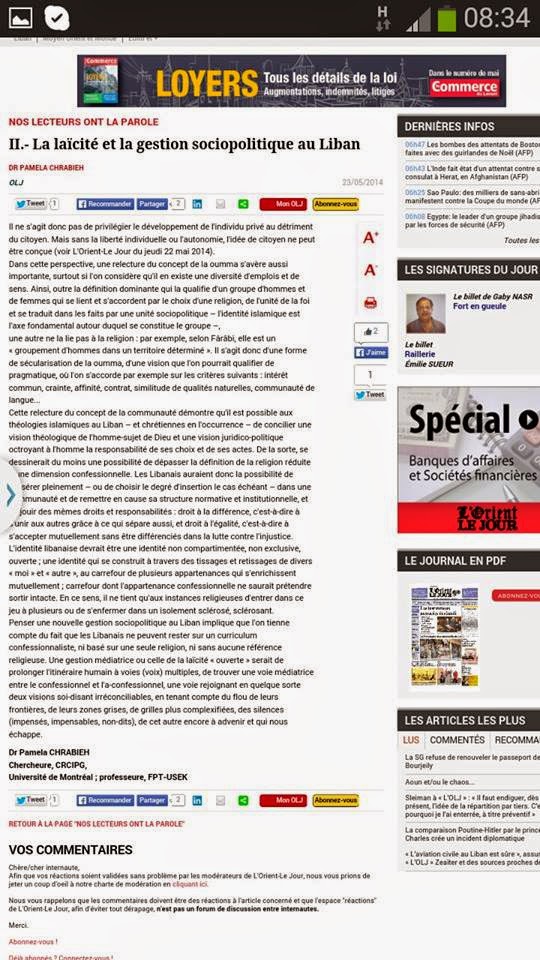
CET ARTICLE FUT PUBLIE EN DEUX PARTIES DANS L'ORIENT-LE-JOUR DES 22 ET 23 MAI 2014 (LIBAN):

http://www.lorientlejour.com/article/868380/i-la-laicite-et-la-gestion-sociopolitique-au-liban.html

http://www.lorientlejour.com/article/868551/ii-la-laicite-et-la-gestion-sociopolitique-au-liban.html


Wednesday, May 21, 2014

Lebanese have to become Good Ancestors

Dr. Pamela Chrabieh
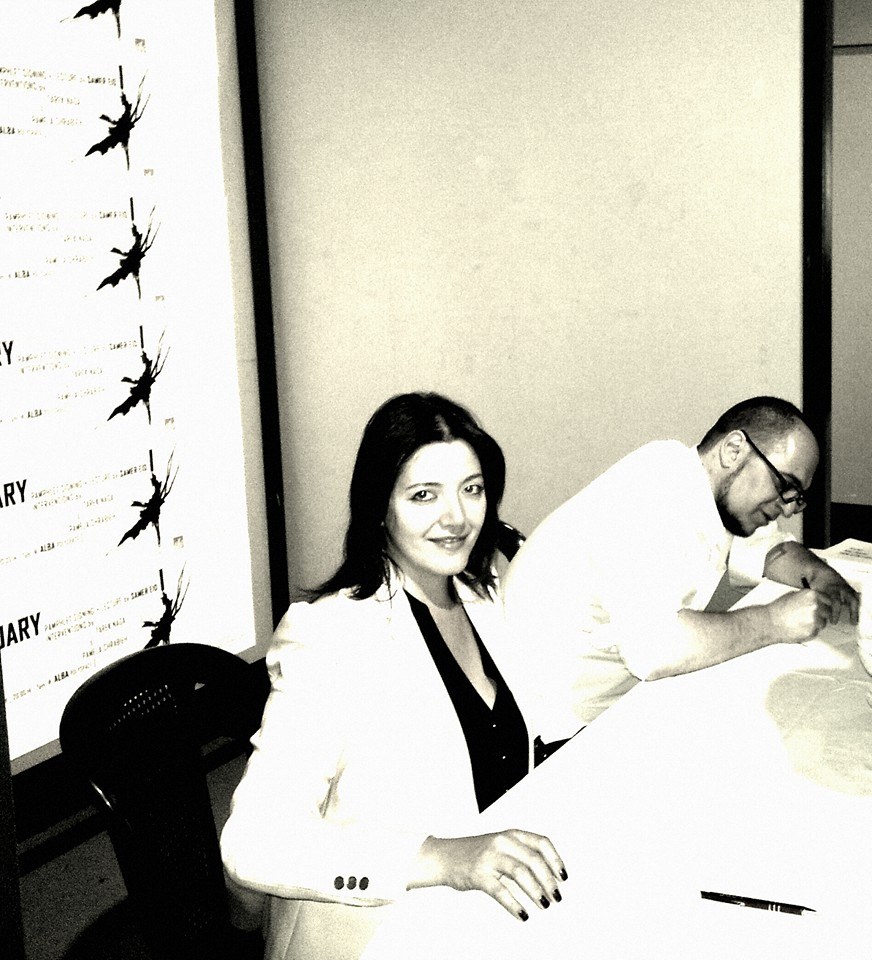
Dr. Pamela Chrabieh and Architect Samer Eid
MOR-TUARY Event and Project, ALBA,
Lebanon, 20-05-2014
Lebanon has witnessed several conflicts in the last decades, caught in a never-ending cycle of wars, both physical and psychological. One of the dramatic consequences was the proliferation of disparate scattered cities and neighborhoods run by warlords, mafia leaders and tribes, manipulated proxies who mastered the art of utilizing their people, and unconventional participants in warfare like suicide-bombers, guerrilla forces, private military contractors, reapers and other unmanned predator vehicles.
In ‘The Garden of the Prophet’ (1934), Gibran Khalil Gibran stated the following: “Pity the nation that welcomes its new ruler with trumpeting, and farewells him with hooting, only to welcome another with trumpeting again. Pity the nation whose sages are dumb with years and whose strong men are yet in the cradle. Pity the nation divided into fragments, each fragment deeming itself a nation”. Robert Fisk found this passage of Gibran contemporary enough to provide the title of his book, ‘Pity the Nation’ (1991), characterizing Lebanon as ‘agonizing’… Unfortunately, ‘agony’ isn’t the proper word which can describe the current situation: there is no nation to pity anymore!
Facing this chaotic war dominant and constantly mutating reality, where violence has become a mere publicity instrument rather than the axis of struggle, one may choose to wait for the unknown, observe endings while doing nothing, leave for foreign oasis, or wipe inner tears turned into wounds, immure in loss, wallow in dead civilizations and become one.
One may choose between absolute sorrow, sorrow with no despite and death.
One may put off all mental images of the resurrected Phoenix on the wall, and shift the battle to the next generations.
Ambient amnesia… And hypermnesia …
There is no national war memory in Lebanon, thus no common history, nor identity, but a myriad of individual/collective memories, histories and identities. There are no contemporary common commemorative spaces, no national martyrs to remember beside the First World War’s, no shared mourning gatherings, no official research centers, nor common political will to support critical discussions about the war, but too many sectarian commemorations. This problem is related to a state sponsored amnesia resulting partly from the general Amnesty Law of 1991 that coexists with the widely differing narratives of the war – political, sectarian, religious, non-religious, social, cultural, ethnic,…
Though many narratives are highly destructive, there are those which can be labeled as positive, contributing to peacebuilding. Artists, movie producers, architects, writers and activists in NGOs have become positive memory makers since the 1990s, shedding light on the war and its victims, depicting the horrors and the struggles to keep souls alive, stressing a causal link between remembrance and inter/trans-sectarian conviviality. Personal perceptions of the war have been depicted in fiction, diaries, music productions, paintings, architectural structures and novels by Lebanese from all backgrounds and identities, relating to all who are concerned with human survival, expressing particular types of memory based on contrition and solidarity facing war.
Most of these memory makers are more concerned with rethinking the past in order to build a better future than reducing their present to a quest of survival and thus shrinking the self to its minimal dimensions – living and operating self-criticism appears to be more important than being trapped in the victim state of mind. They create alternative localities (‘lieux alternatifs’) for a diversity of voices-paths to be communicated, expressed, debated and shared, thus promoting a unified yet pluralistic and mediated society. These localities reveal that social and political spaces are never structured neutrally like a ‘tabula rasa’, but instead consist of individual and collective discourses and practices, visions and interpretations of discursive forces.
Memory makers choose not to forget the past and grant blanket amnesties to the perpetrators of massive crimes. They choose to publicly expose the truth – their truths -, and bring solace to victims, such as in South Africa, Bosnia and Rwanda, where public acknowledgement of victims was considered to be the beginning of the healing process and a form of restorative versus punitive justice. They choose to erase urban borders, breach the divide among Lebanese whose memories linger in the betwixt space of sectarian/political violence, communal loyalty and the desire for a unified nation, and to transcend the contrast between public ruins such as the bullet-ridden Holiday Inn and the restored soulless downtown of Beirut.
Memory makers show that war victims are not only harmed physically (first death). The act of violence transmits an unambiguous message – that their views do not count and their voices will not be heard (second death). Therefore, their rebirth, their ascent from hell, becomes a must, at least through the rehabilitation of their forgotten voices and memories.
According to philosopher Paul Ricoeur in ‘The Memory of Suffering’ (1995), ‘we must remember because remembering is a moral duty. We owe a debt to the victims. And the tiniest way of paying our debt is to tell and retell what happened to them. We have learned from the Greek story-tellers and historians that the admirable deeds of the heroes needed to be remembered and thus called for narration. We learn from Jewish story-teller like Elie Wiesel that the horrible – the inverted image of the admirable – needs to be rescued still more from forgetfulness by the means of memory and narration’. In other words, the marginalized voices speak to the public ear, breaking the pyramid of hierarchy both in the living world and in the afterlife. The unspeakable and unthinkable are communicated and translated. The personal stories brought from the innermost of the individuals bind us anew to the collective.
War affected – and still is affecting – all Lebanese psychologically as individuals and in social/political relationships. It shaped – shapes – their beliefs and patterns of behavior. This contributes to the propensity to participate in the next wave of strife or pass it on to the next generation thereby fueling cycles of violence. Every Lebanese plays some role in this cycle, therefore bears responsibility in it.
The role and influence of events and beliefs from current and previous generations that perpetuate cycles and receptivity to hate is obvious to some, preposterous to others. Such thinking evolved early on in the field of psychology, as explained by Carl Jung in ‘Memories, Dreams, Reflections’ (1963): ‘I feel very strongly that I am under the influence of things or questions which were left incomplete and unanswered by my parents and grandparents and more distant ancestors . It often seems as if there was an impersonal karma within a family, which is passed on from parents to children. It has always seemed to me that I had to answer questions which fate had posed to my forefathers, and which had not yet been answered, or as if I had to complete, or perhaps continue, things which previous ages had left unfinished. It is difficult to determine whether these questions are more of a personal or more of a general (collective) nature. It seems to me that the latter is the case. A collective problem, if not recognized as such, always appears as a personal problem, and in individual cases may give the impression that something is out of order in the realm of the personal psyche. The personal sphere is indeed disturbed, but such disturbances need not be primary; they may well be secondary, the consequence of an insupportable change in the social atmosphere. The cause of disturbance is, therefore, not to be sought in the personal surroundings, but rather in the collective situation’.
There is indeed a role for ancestors and their deeds in the present lives of their descendants. In many cultures, ancestors are seen as available to guide, teach, and to nurture. They represent one of the pathways between the knowledge of this world and the next. Unless the relationship between the living and the dead is in balance, chaos results; and if the imbalance exists, the living individuals have the duty to heal their ancestors, to resolve ‘sick energies’.
According to psychotherapist and initiator of the Garden of Forgiveness in central Beirut, Alexandra Asseily, Lebanese have to become good ancestors, stop being ‘the prisoners and the puppets of the stinging memories of strife’, clean up ‘ancestral arteries so that children are free to act in the now, free from the blocks with echo from the past’, let history inform them, not control them (in ‘Breaking the Cycle of Violence in Lebanon- and Beyond’, 2007). Therefore, they must undergo a process that falls into three steps: take responsibility for the active or passive role they play in propagating war; create a space of self-reflection sot that they can become aware of nocuous behaviors and beliefs that reinforce that role; release the source of grievances they hold on to, so that they can be free to replace old habits and think with new life-affirming ones thereby creating positive cycles around them and their children.
MOR.TUARY incarnates this quest to the past and its abysses, linking it to the present and future, a channel between the visible and the invisible, humanity and a transcendental power conducive to reconciliation. It offers a creative new momentum of transformation and healing, and reminds us all that horrors should never be forgotten in order not to occur again. They should not be forgotten so Lebanese will be able to address their cycles of fear, anger and guilt, to build effective bulwark against future human rights’ violations, and to recover the soul of their nation.

Dr. Pamela Chrabieh with Samer Eid, Alba, Lebanon, 2014
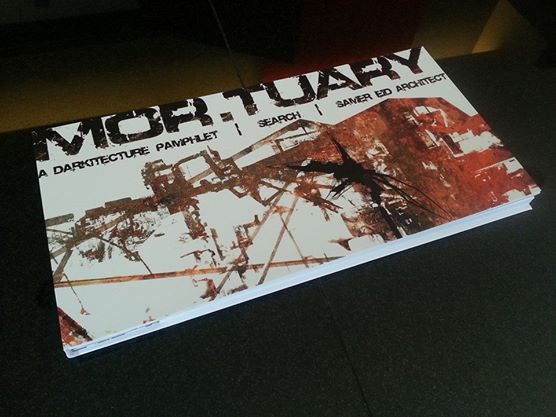
This article was published in Samer Eid’s Architecture Pamphlet MOR-TUARY, Beirut, Color Balance, 2013.

Samer Eid, MOR-TUARY, ALBA, Lebanon, May 2014
Forewords by Dr. Pamela Chrabieh and Architect Tarek Naga
Dr. Pamela Chrabieh
Dr. Pamela Chrabieh
in Samer Eid’s Architecture Pamphlet
Lebanon, 2013